
Loading...
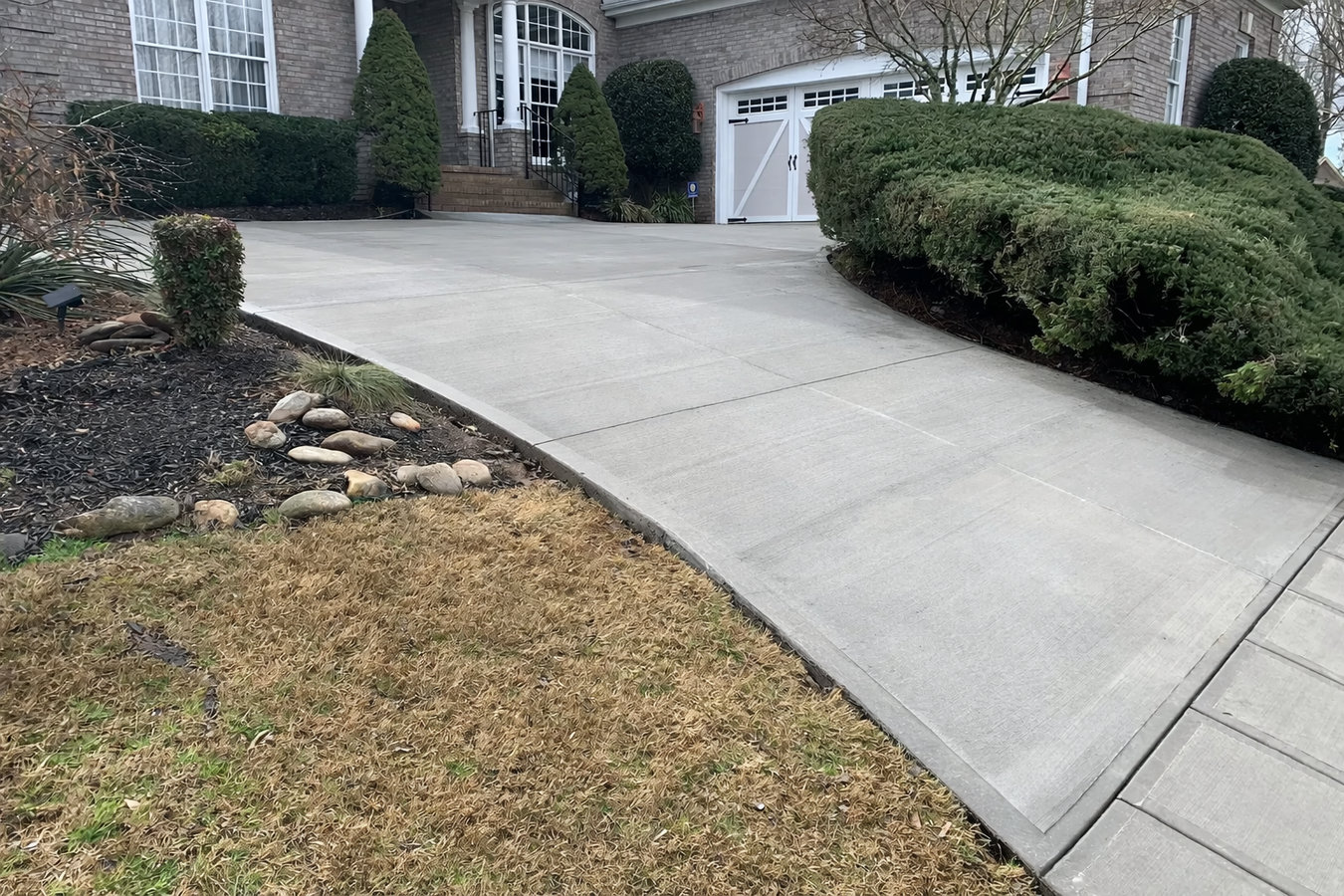
A cracked, heaving, or outdated driveway is more than an eyesore. We design and pour concrete driveways that handle the freeze-thaw cycle, road salt, and heavy traffic - and look good doing it for decades.
Concrete driveway building in State College, PA means removing the old surface, excavating to the right depth, compacting a crushed-stone base, and pouring a properly reinforced slab - most residential jobs take one to two days to pour and about a week before you can drive on them again.
A lot of homeowners in this area are dealing with driveways that cracked after one too many hard winters. The freeze-thaw cycle here is relentless - water seeps into the surface, freezes, expands, and forces cracks open a little more each year. By the time a driveway is showing wide cracks or spalling across a large area, patching is usually a short-term fix at best.
If you are also thinking about outdoor living improvements, our concrete patio construction service lets you handle both at once - same crew, same materials, one mobilization cost.
If you have noticed cracks that seem a little wider each spring, the freeze-thaw cycle is doing its work. Once cracks are wide enough to fit a finger into, patching is usually a short-term fix at best - replacement is the more honest conversation.
If the top layer is peeling off in thin flakes or small chunks after winter - especially on older driveways - that is spalling. It is common on State College driveways poured before modern salt-resistant mixes were standard, and it does not get better on its own.
If water sits on your driveway after rain, especially near the garage door or foundation, the slab may have settled unevenly or was never graded correctly. On sloped lots common around State College, poor drainage can send water toward your home - a new correctly graded driveway fixes both problems.
A driveway that has been through 25 or more central Pennsylvania winters has likely used up most of its useful life. Even if it looks passable, internal weaknesses that are not visible yet will show up soon - replacing it now is almost always less expensive than repeated repairs.
Every concrete driveway installation starts with demolition and removal of the existing surface, followed by excavation, a compacted crushed-stone base, and a correctly sloped slab designed to shed water away from your home. Standard residential slabs are four inches thick - if you park heavy vehicles, RVs, or equipment on your driveway, we discuss going thicker before the job starts, not after. We also connect the driveway to any adjacent surfaces your property needs, including a matching concrete sidewalk from the driveway to your front door.
Finishing options range from a standard brushed texture - which gives the traction you need when it is icy - to decorative stamped or colored finishes that make the surface stand out. We cut control joints into every slab so any future cracking happens in predictable, nearly invisible lines rather than random splits across the face. After curing, we walk every project with you, explain the care instructions, and discuss sealer options.
A textured surface that provides traction in ice and rain - the practical choice for most driveways in this climate.
Planned joints guide cracking to clean, predictable lines so your driveway stays looking sharp for years.
For homeowners who want the durability of concrete with the look of stone or brick - great for high-visibility properties.
Integral color or surface-applied stain that matches your home exterior without sacrificing structural performance.
A quality sealer applied after curing adds meaningful protection against road salt and freeze-thaw damage.
Every slab is built with the right grade to move water away from your garage and foundation.
State College sits in a valley surrounded by Appalachian ridges, and the climate here is genuinely hard on concrete. The area averages around 50 inches of snow per year, and temperatures regularly swing above and below freezing in late fall and early spring - sometimes multiple times in a single week. That repeated freeze-thaw action is the number one enemy of driveways that were not built with it in mind. We see the damage every spring. We use mixes designed for this climate and strongly recommend sealing every finished surface before the first hard frost.
Many homes in the townships around State College - College Township, Ferguson Township, Patton Township - sit on sloped lots where drainage planning is not optional. Homeowners in Bellefonte and Altoona face the same conditions. We assess the grade of every property before pouring and build in the slope that keeps water moving away from your garage and foundation.
We visit your property, measure the area, and look at the existing surface and drainage. You receive a written estimate before any work starts - we respond within 1 business day of your inquiry.
We pull any required permits from the Borough or township before work begins. Permit timelines are factored into the schedule so there are no surprises. Spring and summer slots fill fast - earlier is better.
We remove the old surface, excavate to the right depth, and build a compacted crushed-stone base. This prep work is what separates a driveway that lasts 30 years from one that cracks in five.
We pour and finish the slab, cut control joints, and give you clear instructions for the curing period - including when you can park on it and how to protect the surface through the first winter.
We respond within 1 business day - no obligation to hire. After you submit, someone from our office will call to schedule a free on-site estimate at a time that works for you.
(814) 996-0735Every project is covered - your property and our crew. Working with an unlicensed contractor puts your homeowner's insurance and any future sale of the property at risk.
We are not a regional company that passes your job to a subcontractor. We know the soil conditions, permit requirements, and seasonal constraints in this area because we work here every week.
You get a written scope of work that spells out slab thickness, base depth, control joint placement, and the curing plan before you commit to anything. No phone-only guesses.
We use concrete mixes suited to Pennsylvania winters and recommend sealing every residential driveway before cold weather arrives. The{' '}Portland Cement Association notes that sealing significantly extends surface life in freeze-thaw climates.
These are not marketing checkboxes - they are the things that come up in every homeowner conversation we have. If you want more detail on any of them, ask us directly when we come out for your estimate. You can also read more about our work on the American Concrete Pavement Association website for industry standards that inform how we build every project. When comparing contractors, looking at how a qualified concrete driveway contractor approaches mix selection, base prep, and permitting will help you ask the right questions of anyone you consider hiring.
Pair your new driveway with an outdoor living space - a concrete patio extends usable area and adds curb appeal.
Learn MoreComplete the exterior with a matching concrete sidewalk that connects your driveway to your front door cleanly.
Learn MoreSchedule before the spring rush fills our calendar - most State College homeowners reach out in late winter and early spring.