
Loading...
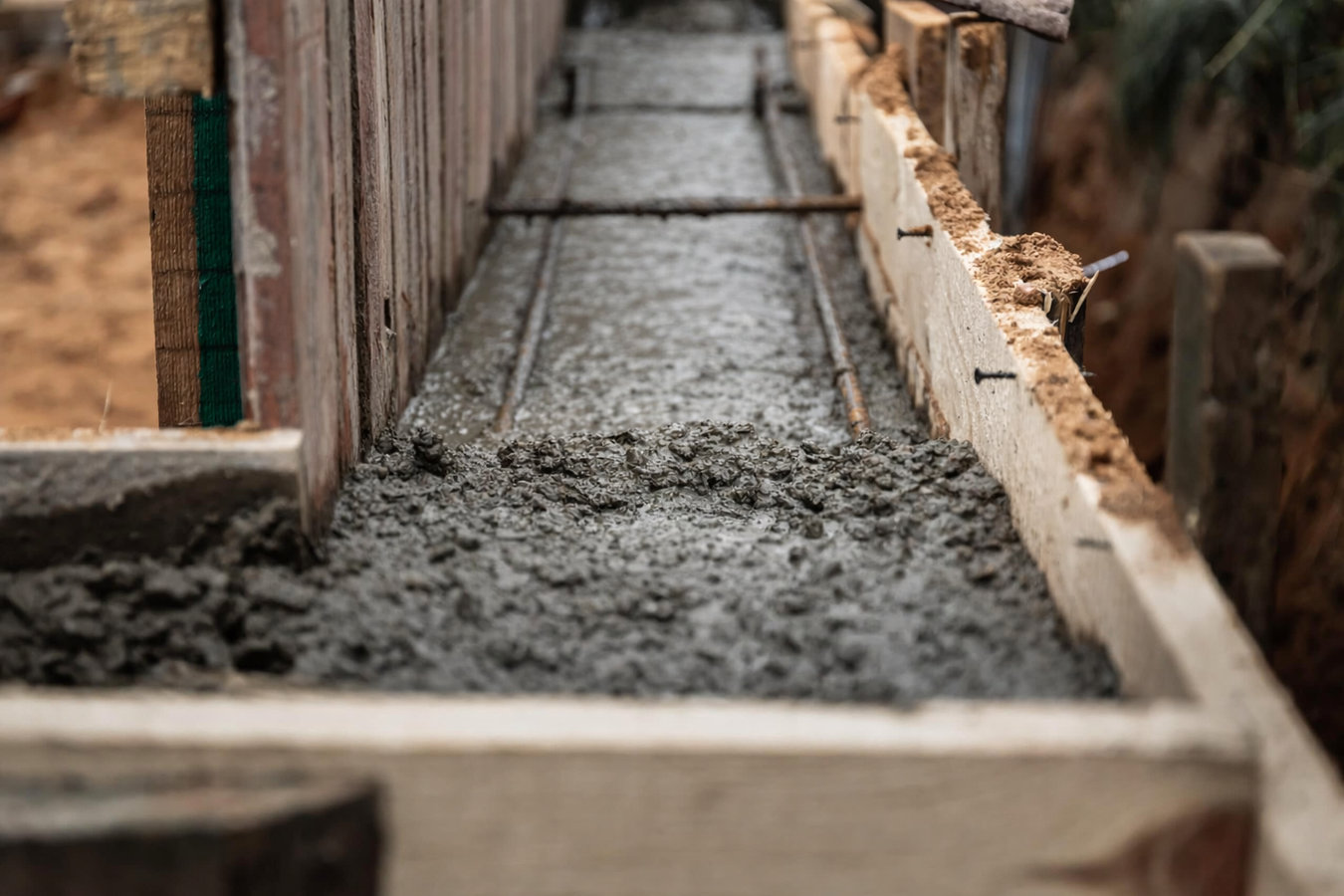
Your foundation is the part of your home that everything else depends on. We handle foundation installation in State College from excavation through waterproofing, with proper frost-depth design and permits coordinated for the borough and surrounding townships.
Foundation installation in State College, PA covers the full process from excavation through backfill - including digging to frost depth, forming and pouring the concrete walls or footings, waterproofing the exterior, installing footing drains, and grading the site so water moves away from the structure - most residential projects run two to four weeks of active work, with concrete curing ongoing during that window.
Foundation work is the least visible part of a home but the most consequential. A correctly installed foundation keeps your home level, dry, and structurally sound for decades. A foundation installed without the right depth, drainage, or waterproofing will make its problems known - through wet basements, sticking doors, diagonal cracks, and shifting floors - often within just a few years.
For projects where a slab-on-grade is sufficient rather than a full excavated foundation, our slab foundation building service covers that scope. A site visit helps determine which approach is right for your specific lot and plans.
Diagonal cracks - especially ones wider at one end - often mean the foundation beneath that part of the house has shifted or settled unevenly. In State College, this can happen when soil has been affected by repeated freeze-thaw cycles over many winters. If a crack has grown since you first noticed it, that is a reason to have a professional look at the foundation, not just the wall.
When a foundation moves, the frame of the house moves with it - and the first place you usually notice this is in doors and windows that used to open and close smoothly. If several in the same area of your home start sticking around the same time, especially after a wet spring or a hard winter, that pattern is worth paying attention to.
Central Pennsylvania gets significant spring rainfall and snowmelt, and homes with aging or poorly drained foundations can start seeing water intrusion that was never a problem before. Damp spots, puddles, or a musty smell in the basement after wet weather may mean the foundation's drainage system is failing. Left unaddressed, water intrusion can damage the concrete itself and create conditions for mold.
If you have purchased land in the State College area and are preparing to build a new home, foundation installation is simply the first major step in the construction process. The right time to start planning is before you finalize your house plans, because the foundation design depends on the soil conditions of your specific lot - and in parts of Centre County, a soil investigation may be required before a design can be completed.
We handle foundation installation as a complete scope - from the first shovel of excavation to the final graded and backfilled site. Excavation is followed by footing installation at or below the frost line, then forming and pouring the foundation walls or slab, depending on the design. Steel reinforcement goes inside every pour. Before the soil goes back, the exterior foundation walls are coated with a waterproofing membrane and footing drains are set in gravel around the base of the walls so groundwater routes away from the structure rather than pressing against it. For larger projects that include adjacent hardscaping, we also offer concrete parking lot building and exterior flatwork so the entire site can be handled by one contractor with a single scope of work.
Permit applications are handled through the correct municipal office - whether that is State College Borough, Ferguson Township, or College Township - and we coordinate the required inspection before the pour. The inspection is not a formality: it is an independent check of the forms and reinforcement at the stage when it is still possible to correct anything that is not right. You get a written estimate before work begins, and we walk you through the waterproofing and drainage installation before backfill goes in so you can see the work with your own eyes.
We dig to the correct depth, remove displaced soil, and grade the site so drainage works from day one.
Footings that extend below the frost line protect against heave - non-negotiable in Centre County winters.
Formed and poured concrete with steel reinforcement, delivered and placed to the correct specifications for your home's load.
Applied before backfill so moisture cannot penetrate the foundation walls - an invisible layer that makes a visible difference over decades.
Perforated pipe and crushed stone at the base of the walls channel groundwater away from the foundation rather than letting it build up pressure.
We pull the correct permit, schedule the required inspections, and keep your project timeline on track through the municipal process.
State College sits in a climate zone where temperatures drop well below freezing from November through March and the ground can stay frozen for weeks. That freeze-thaw cycle puts real stress on foundations that were not built with enough depth or the right drainage. Pennsylvania's building code requires foundation footings to extend below the frost line - in Centre County, roughly 36 inches - and this is not a technicality. Foundations built shallower than that will eventually heave and crack. The homes in older State College neighborhoods near Penn State's campus include many built in the mid-20th century, and some of those foundations are now showing the effects of decades of Centre County winters without adequate waterproofing or drainage. Homeowners in Tyrone and Lewistown face the same frost-depth requirements and many of the same soil conditions as State College area properties.
Centre County's karst geology adds another layer that foundation contractors in other parts of Pennsylvania simply do not deal with. The limestone bedrock underlying much of this area can dissolve over time, and a contractor who does not take soil conditions seriously during the site visit is skipping a step that matters here. Penn State's sustained construction market also means contractors are busy from April through October - planning your foundation project in late winter gives you the best access to experienced local crews before the season peaks.
We reply within one business day of your call or form submission. We schedule a site visit to assess your lot - slope, soil, access for equipment, and proximity to utilities. You receive a written estimate that covers labor, materials, permit fees, and a realistic timeline. Soil and site conditions are evaluated before the quote so the number does not change after work begins.
Before any excavation begins, we apply for the building permit through the correct office - State College Borough, Ferguson Township, or College Township depending on your address. Most foundations require engineered drawings alongside the permit application. We coordinate this and factor the one-to-three-week processing time into your project schedule from the start.
The crew excavates to depth, sets forms with reinforcement, and notifies the municipal inspector before the concrete is poured. The inspection verifies that the reinforcement and forms meet the permitted design - this is the stage when corrections are still practical. Only after the inspection is cleared does the concrete truck arrive.
After the concrete has cured enough to handle backfill pressure, we apply the waterproofing membrane and set the footing drains in gravel before the soil goes back. We walk you through this work so you can see it before it is covered. The site is then graded to drain away from the house and cleaned up. Framing can typically begin once the inspector confirms the foundation is ready.
We visit your lot, review soil conditions and access, and give you a written quote you can compare side by side - no commitment, no pressure.
(814) 996-0735We evaluate your specific lot - slope, soil type, and karst risk - before we give you a number. Parts of Centre County have limestone geology that affects foundation design, and we address it upfront rather than discovering it mid-excavation when it is too late to adjust without a change order.
We walk you through the waterproofing and drainage installation before the soil goes back. You can see the membrane and the footing drains with your own eyes before they are permanently buried. A contractor who buries those layers without showing you has given you no way to verify the work was done correctly.
Pennsylvania law requires underground utility lines to be located and marked before any digging begins. We call 811 on every project as a matter of procedure - not because we are required to remind you, but because striking an unmarked line creates delays and liability that a simple call eliminates. Learn more at pa811.org.
We know the difference between State College Borough's building office, Ferguson Township, and College Township's processes - including the typical processing times for each. Your project timeline accounts for the right office from day one, not as an afterthought when the permit takes longer than expected.
Foundation installation in State College is not the place to cut corners or skip steps. The work is buried, the problems it prevents are expensive, and the consequences of doing it wrong compound over decades. We do this work the way it should be done because the homeowners in Centre County deserve a foundation that holds up through what this climate actually delivers.
For commercial properties or large residential projects that need both a foundation and a paved surface, our parking lot concrete work extends the same quality standards to exterior flatwork.
Learn MoreWhen your project calls for a slab rather than a full excavated foundation, our slab building service covers site prep, frost-depth footings, vapor barriers, and reinforcement for residential and commercial applications.
Learn MoreSpring slots in Centre County fill fast - reach out now and lock in your start date before the season books up.