
Loading...
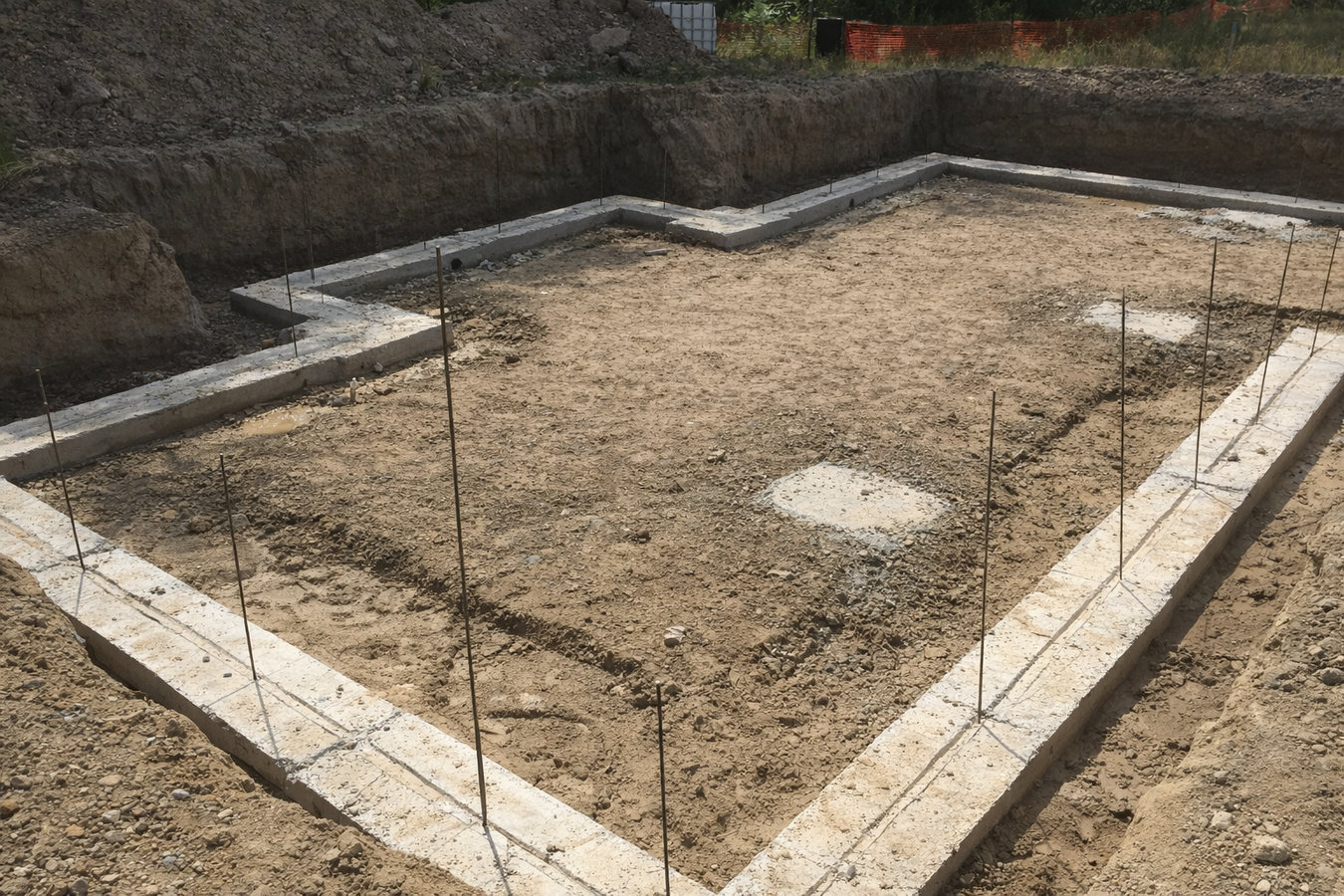
A deck that tilts every spring or a porch pulling away from the house means the footings underneath were too shallow for this climate. We pour concrete footings below the frost line so your structure stays level and secure through every freeze-thaw cycle central Pennsylvania throws at it.
Concrete footings in State College means excavating below the frost line - roughly 36 inches in central Pennsylvania - setting forms, positioning reinforcing steel where the project requires it, and pouring the concrete after a permit inspector has verified depth and dimensions; most deck or post footing projects take one to two days of active work followed by at least a week of curing before any framing begins.
Homeowners across Centre County deal with decks that have started to pull away from the house, porches that feel soft underfoot, and addition projects where the existing footings are not adequate for the new load. State College's freeze-thaw climate is genuinely hard on anything built on a shallow or improperly poured footing - the ground can freeze to roughly 36 inches in a hard winter, and footings that do not reach below that depth get pushed upward by frost heave. A footing job done right is invisible once the work is complete, but everything built above it depends on it holding its position year after year.
If your project involves a full foundation rather than individual post footings, our foundation installation service covers full perimeter and slab foundation work designed for the same frost-depth requirements.
If a gap is opening between your deck and the house, or the deck surface no longer feels level, the footings underneath may have shifted. In State College's freeze-thaw climate, this is one of the most common reasons decks fail - the footings were too shallow or were never poured at all. A leaning deck is a safety issue, not just a cosmetic one.
Any new structure that will be attached to your home or carry significant weight needs proper footings before anything else is built. If a contractor quotes you on an addition or detached garage without mentioning footings or a site assessment, ask directly how the foundation will be handled. In Centre County, a permit is required and an inspector will check the footings before the pour.
Horizontal or stair-step cracks in a foundation wall, or a floor that has started to heave or crack unevenly, can mean the footings below are no longer doing their job. Central Pennsylvania's clay-heavy soils can shift over decades, especially in areas near streams or low-lying ground. These cracks do not always mean catastrophic failure, but they do mean a professional should look at what is happening below grade.
Sheds, detached garages, and older outbuildings in State College-area neighborhoods were often built without proper footings. If a door no longer closes properly, the floor has developed a noticeable slope, or the walls look like they are pulling apart at the corners, the structure may be moving because it has no solid base.
Every footing project starts with an in-person site visit - we check soil conditions, measure the work area, confirm access for equipment, and assess any existing footings before we give you a number. We excavate to below the frost line (at least 36 inches in central Pennsylvania), set forms, position any required reinforcing steel, and coordinate the pre-pour inspection with your local building department. The inspector verifies depth and dimensions before the concrete is poured - this is a required step and one that protects you as the homeowner. After the pour, we protect the concrete if temperatures are expected to drop and walk you through the curing timeline. Our foundation raising service is available when a structure has already moved and the problem requires more than replacing individual footings.
We pull permits with the Borough of State College, College Township, Patton Township, or whichever Centre County municipality your property falls under. We also coordinate PA 811 utility marking before any excavation begins - required by Pennsylvania law. Every footing is poured to the depth and diameter specified in the approved permit, not cut short to save time or cost.
Best for homeowners adding a deck or replacing footings under an existing porch that has started to shift or sink.
Suited for projects attaching a new structure to your home - footings sized for the new load and dug below the frost line.
For older structures in established State College neighborhoods where original footings have deteriorated or were never adequate.
Multiple individual footings for posts or columns - poured as a coordinated set so framing dimensions line up correctly.
We use insulating blankets and protective measures when conditions require working outside the ideal temperature window.
Not every project needs new footings - we assess what is already there and give you an honest recommendation before you commit to a full replacement.
The frost line in central Pennsylvania sits at roughly 36 inches, which means every footing poured here has to go substantially deeper than in states farther south. This is not a suggestion - it is the difference between a footing that stays put and one that gets pushed out of position every winter by frost heave. Centre County also has variable soil conditions: some areas near Spring Creek and lower-lying ground have clay-heavy soils that hold water and shift seasonally, while areas closer to the ridgelines can have rocky or shale-heavy ground that slows excavation and adds to project cost. A contractor who does a real site assessment before quoting is not stalling - they are doing the job correctly. Contractors who quote without visiting your property cannot account for what the ground actually looks like, and the difference between sandy and clay-heavy soil can change both the timeline and the price in ways that are not visible from the street.
Penn State's presence also makes this one of the busier construction markets in central Pennsylvania. Spring and summer bring a surge in renovation activity as rental properties turn over between academic years, which means the best local contractors book up faster than in comparable towns. Property owners in Tyrone and Altoona who plan footing projects for spring should reach out in late winter to secure their preferred start date before the busy season fills the schedule.
We come to your property to look at soil conditions, measure the excavation area, and assess any existing footings. You will receive a written quote specifying excavation depth, footing dimensions, and what is included - we do not quote firm prices over the phone without seeing the site first. We respond within one business day of your inquiry.
We pull the building permit from your local municipal office and coordinate PA 811 utility marking before any digging starts. Depending on your municipality and how busy the permit office is, this step can take a week or two. We handle both so you do not have to navigate the process yourself.
The crew digs to the required depth - at least 36 inches below grade in State College to clear the frost line. Before the pour, a municipal inspector visits to verify depth and dimensions. This inspection is required by your permit and is an independent check that the footing meets local code before it is buried.
Once the inspection is approved, concrete is poured into the forms and leveled. The area stays off-limits for at least a week while the concrete cures. We cover footings with insulating blankets if temperatures are expected to drop. After curing, we confirm the timeline for the next phase - framing, posts, or foundation walls, depending on your project.
Free on-site estimate - we visit your property so your quote reflects actual soil and site conditions.
(814) 996-0735Every footing we pour in this area goes below 36 inches - the frost depth for central Pennsylvania. We do not adjust that number based on a tight schedule or a customer asking for a lower bid. A footing at the right depth is invisible once the job is done, but it is the single most important factor in whether your structure stays level through 30 years of State College winters.
We pull the permit and schedule the inspector before the pour - not as an afterthought. The inspector verifies that the excavation meets depth and dimension requirements before a single yard of concrete goes in. That step is required by your permit and it is the one independent checkpoint you get before the work is buried. We do not skip it, and we do not pour before the inspector signs off.
Clay-heavy soils near lower-lying areas of State College and rocky ground near the ridgelines behave very differently under a footing. We assess your specific site before quoting and adjust depth, footing width, and drainage considerations accordingly. The American Concrete Institute publishes standards on soil bearing and footing design - our work is informed by those guidelines and applied to the actual ground conditions we find at your property.
Many homes in State College's established neighborhoods - Holmes-Foster, Highlands, streets near downtown - were built in the mid-20th century with footing standards that would not meet today's requirements. When homeowners in these areas add onto their homes or replace aging structures, we assess what is already in the ground rather than assuming old footings can carry new loads. You get an honest answer about what needs to be replaced and what can stay.
When the footing is right, everything built on top of it stays right - through thirty years of State College winters, through the seasonal ground movement that comes with Centre County soils, and through whatever the project demands. That is the standard we work to on every job, from a single deck post to a full garage foundation.
When footings alone are not enough and an existing foundation needs to be lifted and stabilized, foundation raising addresses the structural problem at its source.
Learn MoreFor new construction or full foundation replacement, foundation installation builds on the same below-frost-line principles as individual footing work.
Learn MoreState College contractors book up fast once the ground thaws - reach out now to lock in your spot before the spring rush.