
Loading...
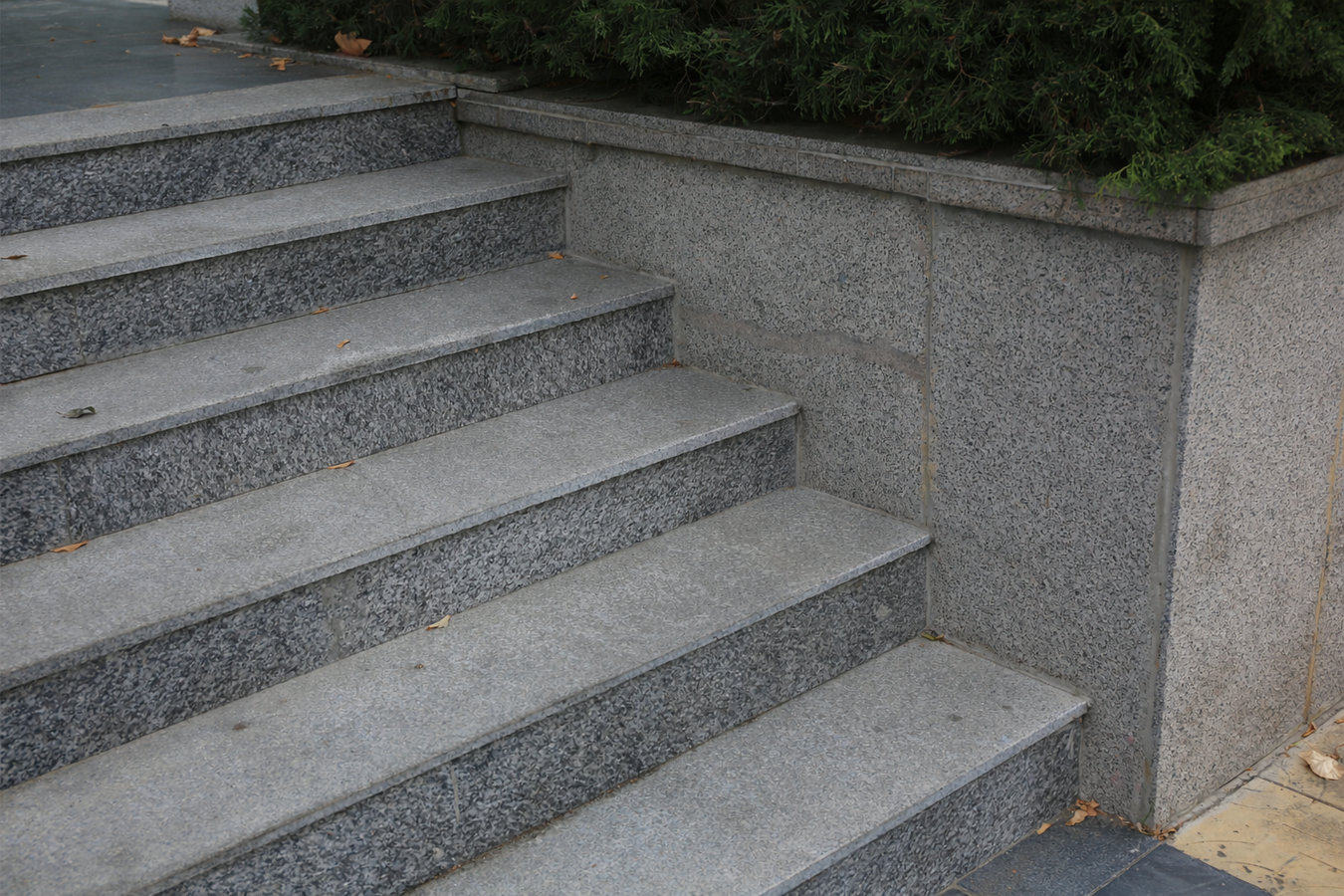
Crumbling, cracked, or slanted steps are a safety problem and a curb appeal problem at the same time. We build concrete steps in State College that hold up through Central Pennsylvania winters, drain correctly, and give your home a clean, solid entry.
Concrete steps construction in State College, PA means removing your old steps, preparing a compacted gravel base underneath, building forms in the shape of your new staircase, pouring the concrete, and finishing the surface with a textured grip - most residential projects take one to two days of active work, with a curing window of 24 to 48 hours before foot traffic.
A lot of homes in State College and the surrounding townships were built in the 1940s through 1980s, and many of those original front stoops are now showing the effects of decades of Central Pennsylvania winters. Spalling, cracking, and settling are common on steps that were never built for this climate or were never sealed. Once the damage starts, it accelerates - a crumbling step in October can become a genuine safety hazard by April.
If your property also has grade changes or erosion concerns, our concrete retaining walls service is often built alongside step projects on the sloped lots common throughout this area.
If the top layer of your steps is peeling away in thin sheets or the edges are breaking off in pieces, that is spalling - a sign the concrete has been damaged by freeze-thaw cycles. It is very common on older State College homes. Once spalling starts it tends to accelerate, especially through another central Pennsylvania winter. Steps in this condition are also a trip hazard.
Small surface cracks can sometimes be patched, but cracks that run all the way through a step or that have been growing over time usually mean the structure underneath has shifted or settled. In State College, clay-heavy soils can undermine the base over decades. A contractor can quickly tell you whether patching makes sense or whether the whole set needs to come out.
Concrete steps should slope very slightly away from your house so rainwater runs off and away from your foundation. If you notice puddles forming at your threshold after a storm, your steps may have settled in a way that reverses that drainage. Over time, that water can work its way under your door and into your foundation - a much more expensive problem than new steps.
Many homes in State College and the surrounding neighborhoods were built in the mid-20th century, and original concrete steps from that era are simply reaching the end of their useful life. Even if the damage looks minor right now, older steps that have been through hundreds of freeze-thaw cycles are often more fragile than they appear. Getting an honest assessment costs nothing and helps you plan before a small problem becomes a safety issue.
Every steps project begins with demolition - breaking up and hauling away your old concrete - followed by grading and compacting a crushed stone base that will support the new structure. That base preparation is what most people cannot see, but it is the step that determines whether your new stairs last 10 years or 40. We build the wooden form in the exact shape of your new steps, pour the concrete, and finish the surface with a textured grip so the steps are safe when wet. We also tie in any adjacent concrete work your property needs, including slab foundation work or other exterior surfaces, so everything matches and drains correctly.
Finish options range from a standard broom texture to decorative stamped or brushed surfaces that suit more formal front entries. We also handle permit applications for projects within State College Borough and the surrounding townships - if a permit is required, we pull it before work begins so there are no surprises on your timeline. You get a written estimate before anything starts, and the price on that paper is the price you pay.
Full tear-out and haul-away of your old steps - the site is clean before we start building.
Crushed stone base under every pour - the step that prevents settling and cracking over time.
A textured, slip-resistant surface that provides safe footing in all weather - the right call for most front and side entries.
Stamped or brushed surfaces for homeowners who want a more polished front entry look.
Steps built to drain away from your home - no pooling at your threshold after rain or snowmelt.
We manage the permit application and inspection scheduling for projects within State College Borough and surrounding townships.
State College typically sees 100 or more freeze-thaw cycles per year - temperatures that swing above and below freezing repeatedly from late fall through early spring. Every time water gets into a small crack or pore in the concrete and then freezes, it expands and makes the crack bigger. For steps, this means the quality of the concrete mix and the surface finish matters enormously. Steps built with a mix designed for cold climates and sealed properly will outlast cheaper work by decades in this area. The housing stock here reinforces the point - a large share of homes in State College Borough and the surrounding townships were built between the 1940s and 1980s, and many of those original front stoops are simply reaching the end of their useful life.
Because Penn State drives a competitive housing market in Centre County, first impressions count at the front door. Homeowners in Lewistown and Lock Haven face the same climate and soil conditions, and we carry the same base preparation and cold-weather standards to every project we do across the region.
We ask a few basics - how many steps, what condition they are in, and whether you want a simple or decorative finish. Most estimates require a free on-site visit to measure and assess before we give you a written quote. You will hear back within one business day, and the estimate covers demolition, materials, labor, and cleanup.
For most attached step projects in State College Borough, we pull a building permit before work begins. This adds a few days to the timeline but means a Borough inspector signs off on the finished work. Once the permit is in hand, you get a confirmed start date and a clear heads-up on the curing window.
The crew breaks up and removes your old steps - expect some noise for an hour or two. They haul away the debris and compact a gravel base underneath. This prep work is what determines whether your new steps last 10 years or 40 - it is not glamorous, but it is the most important part of the job.
We build the form, pour the concrete, and apply your chosen surface texture. The form comes off the next day and you can walk on the steps after 24 to 48 hours - plan to use a back or side entrance during that window. Before we leave, we walk you through the drainage slope, explain the sealing schedule, and answer any questions.
No pressure. We will come out, measure your steps, and give you a clear price in writing - so you can compare fairly and decide on your own timeline.
(814) 996-0735Central Pennsylvania winters are hard on concrete that was not built for them. We use air-entrained mixes and surface treatments that handle repeated freeze-thaw cycles - the kind this region sees every year. That is the single biggest factor in whether new steps crack within a few winters or hold up for decades.
Pennsylvania requires home improvement contractors to register with the state under the Home Improvement Consumer Protection Act. You can verify any contractor's registration through the PA Attorney General's office before you sign anything. Hiring a registered contractor gives you legal protections and access to a consumer recovery fund if something goes wrong.
State College Borough requires permits for most attached exterior step work, and we handle that paperwork as part of every qualifying project. A permit means an independent inspector confirms the work meets local safety standards - which also protects you when it comes time to sell your home. Work done without a required permit can create real headaches at closing.
We will tell you honestly whether your situation calls for a patch or a full replacement - even when the patch is the lower-cost option. Many older State College homes have steps that are simply past the point where patching makes sense, and you deserve a straight answer on that before spending money on a short-term fix.
The National Ready Mixed Concrete Association sets quality standards for concrete materials, and the PA Attorney General provides the contractor registration verification tool that protects homeowners across the state. Together those two resources give you a straightforward way to confirm you are hiring someone legitimate before any work starts.
If your home project needs more than steps, a new slab foundation uses the same careful base preparation and pour standards we apply to every concrete project.
Learn MoreOn sloped lots common throughout State College, retaining walls and steps are often built together to manage grade changes and create safe, level entry points.
Learn MoreState College installation season runs late April through October and contractor slots fill fast - reach out now to lock in your start date and get your steps done right.