
Loading...
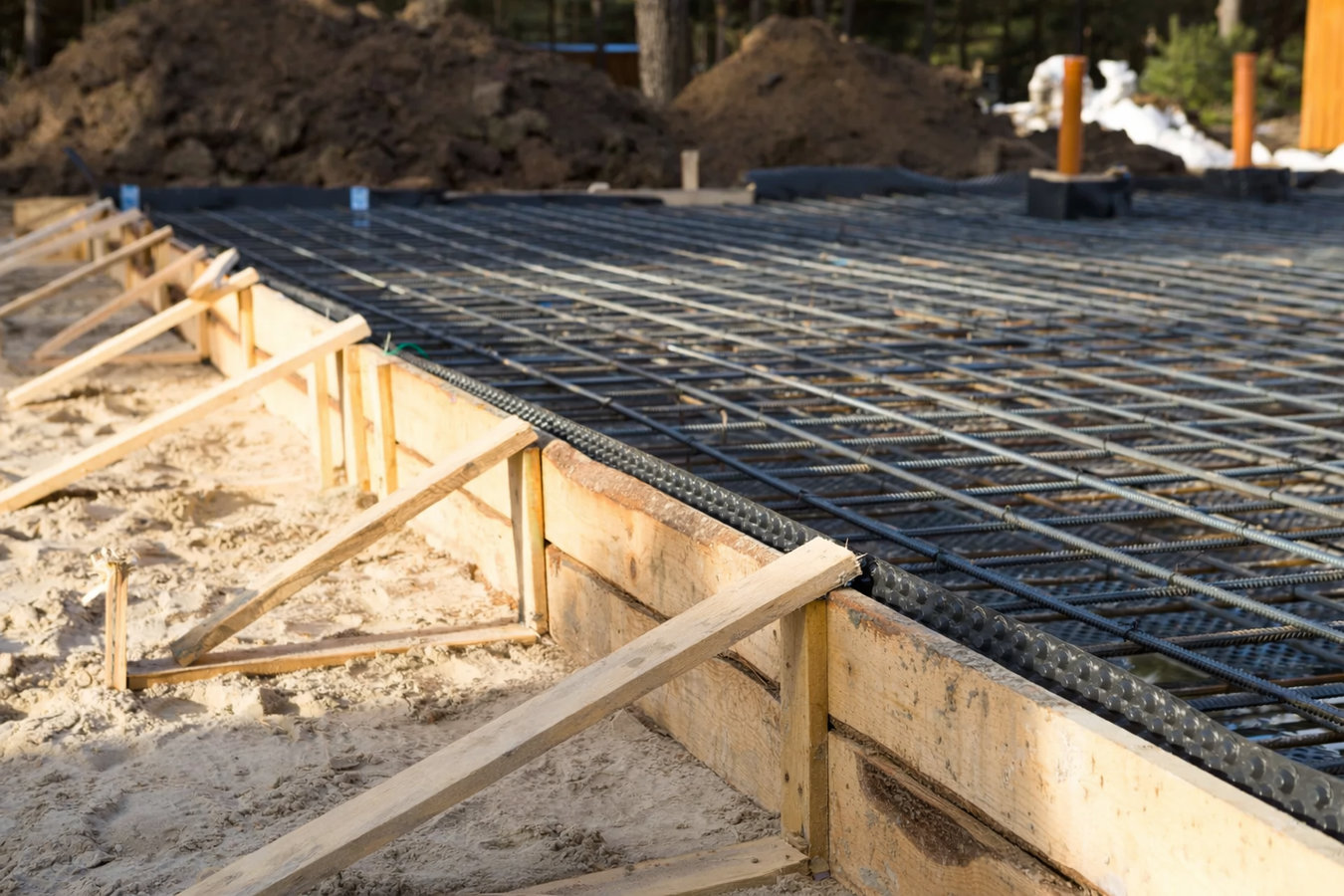
A slab foundation is the base everything else depends on. We build slab foundations in State College with the correct frost-depth footings, vapor barriers, and reinforcement that central Pennsylvania's climate demands.
Slab foundation building in State College, PA means grading and compacting the site, laying gravel and a moisture barrier, setting forms with perimeter footings dug below the 36-inch frost line, placing steel reinforcement, and pouring the concrete - most residential slabs take three to seven days of active work, with a 28-day curing period before framing begins.
Whether you are adding a room, building a new garage, or starting a full new-construction project in State College, the slab is where everything starts. Get it right and the rest of the build goes smoothly. Rush it or cut corners on the prep work and you will be dealing with cracks, moisture problems, and uneven floors for the life of the structure.
Many slab projects in this area are part of a larger construction scope. If your project also involves foundation walls or below-grade work, our foundation installation service covers that full scope, from excavation through waterproofing.
The clearest sign is that you have a lot or a section of your property with no foundation yet and you are planning to build on it. A new garage, addition, or accessory structure in the State College area almost always starts with a slab. Getting the foundation right from the beginning is far less expensive than correcting settlement problems later.
Hairline cracks in concrete are normal, but cracks you can fit a quarter into - or sections where one side has lifted above the other - suggest the ground underneath has moved. In State College's karst terrain, this kind of movement can point to soil settling or a subsurface issue, and it warrants a professional assessment before anything is built on top.
The white, chalky deposits you sometimes see on concrete floors are called efflorescence - a sign that moisture is moving up through the slab. If your floor also feels damp in spots, the vapor barrier under the slab may have failed or was never installed. State College's wet springs and clay-heavy soils in some neighborhoods make this a common problem on older slabs.
When a foundation shifts, the frame of the house shifts with it, and doors or windows that used to open smoothly start to bind. If this is happening in multiple spots around your home - especially after a wet spring or a hard freeze-thaw cycle - it can be a sign that the slab below is no longer level. It is worth getting a look before the problem grows.
Every slab we build starts the same way: with the ground. We grade the site to the correct elevation, compact the soil, lay a crushed stone base for drainage, and install a polyethylene vapor barrier to stop moisture from migrating up through the floor. Then the forms go in. Perimeter forms are set with footings that extend below the frost line - in Centre County, that means going down roughly 36 inches - so that freezing and thawing soil cannot push the foundation. Steel reinforcing bar or wire mesh goes inside the form before the concrete is poured. For projects that also involve related structural work, we tie in our concrete footings service so everything is built as a unified system.
The pour itself is one day of concentrated work - a concrete truck delivers the mix, the crew spreads, levels, and finishes the surface, and control joints are cut to guide any minor cracking to predictable locations. We handle permit applications through State College Borough, Ferguson Township, Patton Township, or whichever municipality governs your address. You get a written estimate before work begins, and we walk you through every stage so there are no surprises.
Level, compacted ground is the first requirement - no concrete performs well on poorly prepared soil.
A drainage layer and moisture barrier protect the slab from ground water - essential in State College's wet seasons.
Footings dug below the 36-inch Centre County frost line prevent frost heave from cracking or lifting your slab.
Rebar or wire mesh inside the form gives the slab tensile strength - the difference between a slab that lasts decades and one that cracks in the first few years.
A smooth or textured finish plus saw-cut control joints direct minor cracking to planned locations so it stays manageable.
We pull the permit from the correct municipality and coordinate the inspection before the pour - no shortcuts, no surprises.
State College sits in central Pennsylvania, where the ground can freeze to a depth of roughly 36 inches in a hard winter. That frost line drives one of the most important decisions in slab foundation design: how deep the perimeter footings go. Footings that do not extend below the freeze point are vulnerable to frost heave - the soil around them freezes and expands, literally pushing the foundation upward. Footings that reach below the frost line stay stable regardless of how cold the winter gets. This is a requirement here that simply does not apply the same way in warmer states, and it is a meaningful part of what makes a slab foundation in State College cost more to build correctly. Homeowners in Bellefonte and Altoona face the same frost-depth requirements and local geology considerations.
Centre County also sits in a karst region - an area underlain by limestone bedrock that can slowly dissolve over time and create voids underground. For most residential lots this is not a problem, but it is one reason why experienced local contractors take site preparation seriously rather than treating it as a box to check. Combined with Penn State's active construction market driving strong demand for skilled concrete crews each spring, planning your slab project early and working with a contractor who knows the local soil is genuinely worth the effort in this area.
You call or fill out the contact form. We reply within one business day, ask about your project size, site location, and timeline, then schedule a site visit to assess soil conditions and access. You receive a written estimate that breaks down labor, materials, and any permit fees - no surprises.
We apply for the building permit through the correct municipality - State College Borough, Ferguson Township, or whichever office governs your address. Permit processing typically takes one to two weeks. We build that time into your schedule upfront so your start date is realistic from the beginning.
The crew grades, compacts, and forms the site over one to two days. A municipal inspector visits to verify that the reinforcement and forms are correct before any concrete is poured. This inspection is required - and it protects you by having an independent set of eyes on the work at the critical stage.
The concrete is poured, leveled, finished, and control-jointed in a single day. The surface is firm enough to walk on within 24 to 48 hours, but full curing takes about 28 days. We walk you through the finished slab at handoff and explain what normal settling looks like versus something worth watching.
We will visit your site, assess the soil and access conditions, and give you a written quote - no obligation, no pressure.
(814) 996-0735Every slab we build in State College goes through the proper municipal permit and inspection process. That means your foundation is on record, your home's value is protected, and you will not face a problem when you sell or refinance because someone cut a corner.
We know Centre County's 36-inch frost line requirement and price it into every estimate from the start. You will not be quoted one number and handed a higher bill after excavation reveals what the local code actually requires.
Pennsylvania law requires contractors doing residential work to register with the state. We are registered with the PA Attorney General's Home Improvement Contractor program, which gives you legal protections and recourse that an unregistered crew cannot offer. You can verify registration at attorneygeneral.gov.
You receive a written estimate before work begins, and the number on that paper is the number on your invoice. Soil conditions and site access are assessed before we quote, not after the excavation has already started and it is too late to back out.
Building a slab foundation correctly in State College means doing the prep work that is easy to skip and the permitting that is easy to avoid. We do both because the homeowners we work with in Centre County deserve a foundation that holds up for decades - not one that starts showing problems in the first few winters.
When your project requires a full basement or poured walls rather than a slab, our foundation installation service covers the complete process from excavation through waterproofing.
Learn MoreEvery slab starts with footings - standalone footing work for posts, columns, or additions is a related service we handle throughout the State College area.
Learn MoreSpring contractor slots in Centre County fill fast - reach out now and lock in your start date before the building season peaks.