
Loading...
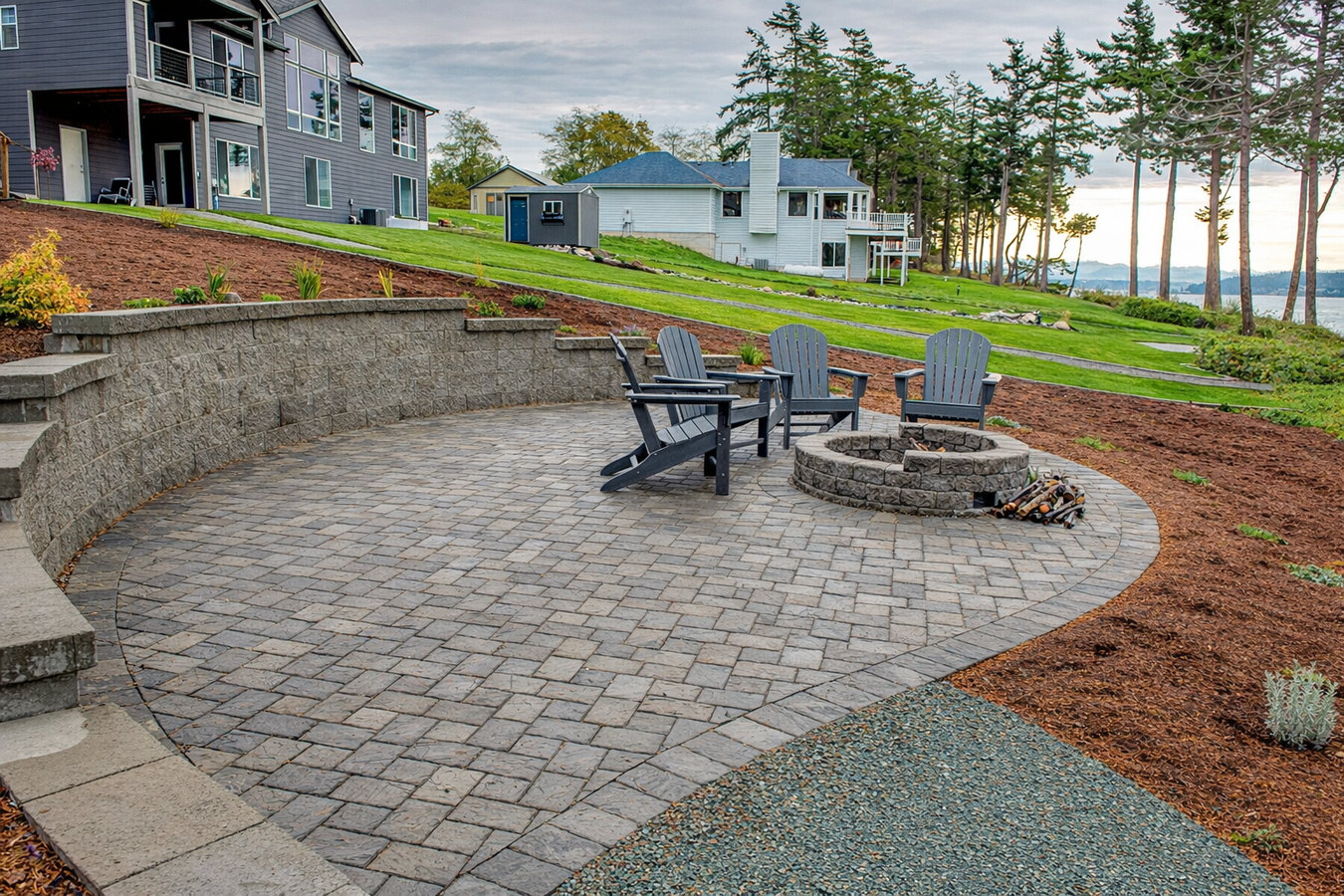
A backyard without a solid surface is a backyard you cannot use. We pour concrete patios that handle Pennsylvania winters, drain correctly, and give you a clean outdoor space that looks good year after year.
Concrete patio construction in State College, PA means excavating the area, compacting the soil, laying a gravel base for drainage, and pouring a properly finished slab - most residential patios take one to three days of active work, and you can place furniture on them after about a week.
A lot of homeowners in this area either have an old patio that has cracked and shifted after years of Centre County winters, or they have grass where they wish they had a place to sit. Both are good starting points. The freeze-thaw cycle here is genuinely hard on any outdoor surface that was not built with proper base depth and drainage - patios that skip those steps tend to crack, heave, and pool water within a few years.
If you want something more decorative, our concrete pool decks service uses the same core construction approach with finishes suited for wet outdoor areas. When comparing bids, look at what each concrete patio contractor specifies for base depth and drainage - those details separate a 10-year slab from a 40-year one.
If cracks are wider than a pencil, sections have shifted up or down relative to each other, or edges have crumbled away, your patio has likely reached the end of its useful life. In State College, freeze-thaw cycles accelerate this damage - what starts as a hairline crack in October can become a tripping hazard by April.
A properly built patio slopes slightly away from your home. If you notice puddles after rain, or water collecting near your siding or foundation, the grade of your current patio may be wrong. This is both a comfort issue and a potential foundation issue - a new patio built with correct drainage solves both at once.
If your backyard is all grass and you want a place for a table, grill, or chairs, a concrete patio is one of the most cost-effective ways to create that space. Many State College homeowners add patios when settling in for the long term or preparing to sell - both are good reasons.
Uneven surfaces or a patio that holds water because it does not drain properly become genuinely dangerous during State College winters. If anyone in your household has slipped or nearly slipped on your outdoor surface, that is a clear signal that the surface needs to be replaced with something flat, properly sloped, and sealed.
Every patio project starts with excavation - removing grass, topsoil, and any soft material from the area - followed by soil compaction and a four-inch gravel base that handles drainage and prevents the slab from shifting over time. Standard slabs are four inches thick for foot traffic. If you plan to place very heavy outdoor structures or need to match an adjacent surface, we discuss the right thickness before the job starts. We also link your patio to any other concrete work your property needs, including stamped concrete finishes that give the look of stone or brick without the long-term maintenance.
Control joints are cut into every slab so any future cracking happens in planned, nearly invisible lines rather than random splits across the surface. Finishing options range from a practical brushed texture to decorative stamped patterns and integral color - both look great and both hold up in this climate when built correctly. After curing, we walk every project with you, point out the drainage direction and care instructions, and discuss sealer options before the first frost hits.
A textured, slip-resistant surface that handles Pennsylvania winters without requiring extra maintenance.
Patterns that mimic stone, brick, or slate - ideal for homeowners who want a decorative surface without the upkeep of natural materials.
Integral pigment or surface stain that matches your home exterior and stays looking clean for years.
Four inches of compacted crushed stone under every slab - the step that separates patios lasting 10 years from ones lasting 40.
Shallow planned lines that guide any cracking to predictable spots so your surface stays looking right.
Every slab is graded to move water away from your home - no pooling, no icy patches near your foundation.
State College sits in a valley surrounded by Appalachian ridges, and Centre County has a mix of clay-heavy soils that hold water and expand when wet. Clay soil plus repeated freeze-thaw cycles - common here from late fall through early spring - is a difficult combination for any outdoor concrete surface. A patio that skips proper base depth or drainage planning on this type of soil can settle unevenly within a few years. We assess soil conditions and lot drainage before every pour.
The housing market around Penn State also means outdoor living space carries real value. Whether you own a home near campus, in Ferguson Township, or out in Bellefonte, a well-built patio photographs well and adds measurable value before a sale. Homeowners in Lewistown and other surrounding communities face the same soil and climate conditions, and we bring the same preparation to every project across the region.
We come to your home, measure the space, and look at the site conditions. You receive a written quote that breaks down what is included - not just a single number. We respond within 1 business day of your inquiry.
We handle the permit application with the Borough of State College or your township before a single shovel goes in the ground. A permitted project means an inspector signs off - which protects you if you ever sell.
On the first day, we remove grass and topsoil, compact the subgrade, and lay a gravel base for drainage. This is the most important part of the job and is what determines whether your patio lasts 10 years or 40.
We pour, finish, and cut control joints, then walk you through exactly how long to stay off the surface and how to protect it through the first winter - including salt avoidance and sealer timing.
We respond within 1 business day - no obligation to hire. After you submit, someone from our office will call to schedule a free on-site estimate at a time that works for you.
(814) 996-0735Pennsylvania requires contractors who do home improvement work to register with the state. Hiring a registered, insured contractor gives you legal protections if something goes wrong - and peace of mind before it does.
Centre County has clay-heavy soils that expand when wet and drain slowly. We factor that into base depth and drainage design on every project - not as an upsell, but because that is what the ground here requires.
You get a written scope of work that spells out excavation depth, base material, concrete thickness, finishing type, and cleanup before you commit. No surprises on the final invoice.
We build every patio to handle freeze-thaw cycles - proper base, adequate thickness, control joints, and sealer applied before cold weather arrives. The Portland Cement Association recommends sealing in freeze-thaw climates, and we follow that guidance on every job.
Local knowledge matters for outdoor concrete in this climate. You can review best-practice guidelines at the Portland Cement Association and confirm permit requirements with the Borough of State College Building Department. We meet or exceed both.
Add the look of stone, brick, or tile to your patio surface - stamped concrete gives you design flexibility without the maintenance of natural materials.
Learn MoreIf your patio connects to a pool area, a concrete pool deck uses the same durable construction principles with a slip-resistant finish.
Learn MoreSpring slots fill fast - contact us now and we will have your written estimate ready before the construction season books up.