
Loading...
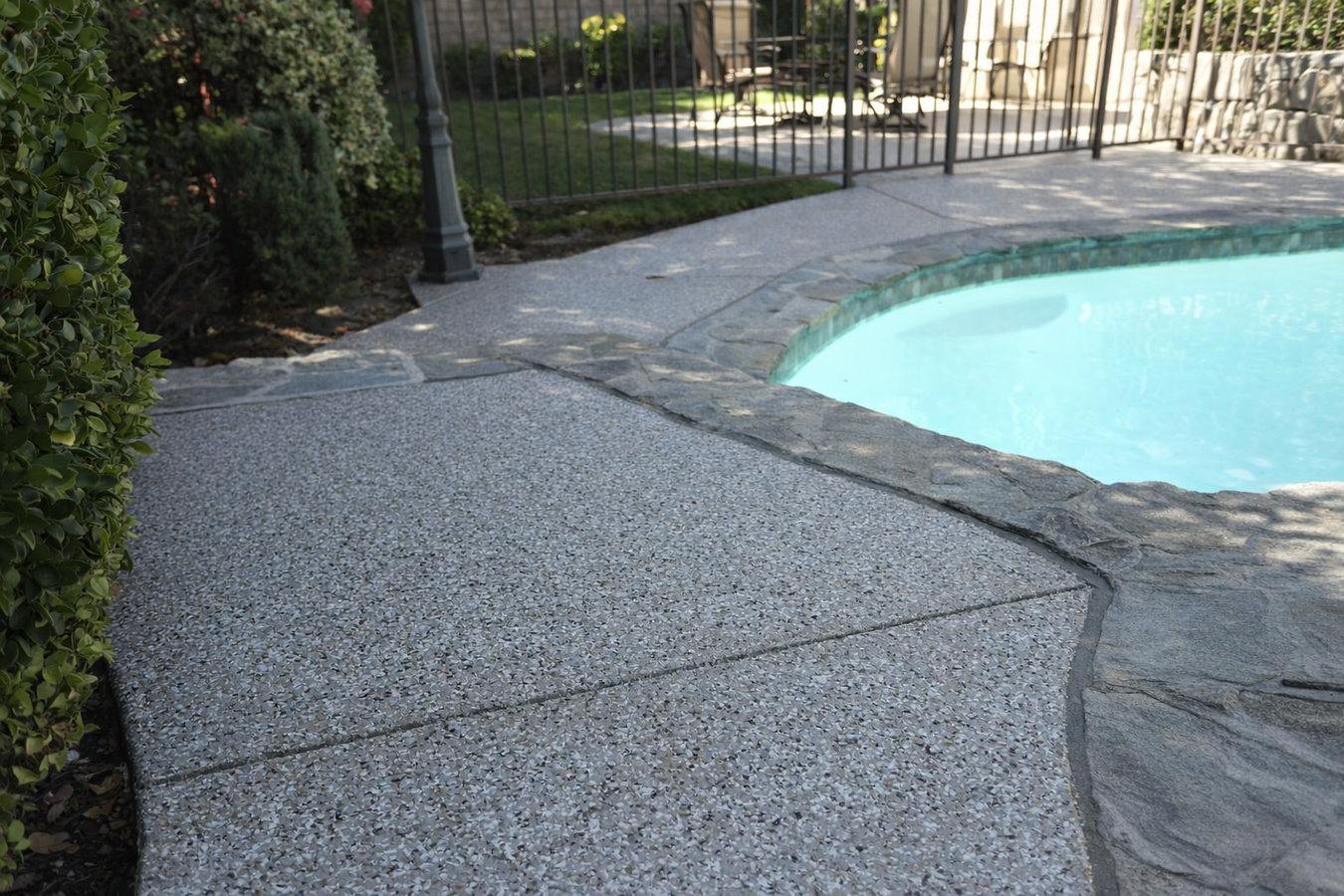
A pool deck that pools water, cracks over winter, or turns slippery when wet creates real problems. We build concrete pool decks in State College that drain correctly, handle Centre County freeze-thaw cycles, and stay safe and solid for years.
Concrete pool decks in State College, PA involve removing any existing surface, grading and compacting the ground, pouring a properly sloped slab with a textured finish, and cutting control joints - most residential projects take two to four days of active work, with a full cure window of about one week before normal use.
Most homeowners in this area come to us with one of two situations: an old deck that has cracked, spalled, or shifted after years of Centre County winters, or a pool area that was never finished properly and has become a drainage and safety problem. Both are fixable. The key is building the new surface correctly from the base up - drainage slope, base compaction, and surface treatment are not optional in this climate.
If you also need steps connecting the deck to your yard or back door, our concrete steps construction service uses the same durable methods and can be built as part of the same project.
If you noticed a hairline crack last fall and it is noticeably wider or longer this spring, that is freeze-thaw damage doing its work. State College sees repeated temperature swings above and below freezing every winter. A crack you can fit a quarter into is no longer cosmetic - it is letting water in, and the next winter will make it worse.
After a rain or a busy afternoon in the pool, water should drain away from both the pool edge and your home. If you see puddles sitting on the deck for more than a few minutes, or water running toward the house, the slope has either settled or was never built correctly. This is a safety issue and a long-term foundation concern.
If the top layer of your concrete is peeling off in thin chips or the surface feels rough where it used to be smooth, that is spalling. It is extremely common on older pool decks in Central Pennsylvania that were never sealed or were sealed infrequently. Left alone, spalling spreads and eventually compromises the structural layer beneath.
Many homes in established State College neighborhoods have pool decks that date to the 1980s or early 1990s. If the deck has never been resurfaced or resealed, it has likely absorbed years of pool chemicals, sunscreen, and freeze-thaw stress. Even if it looks passable, a contractor assessment may reveal the surface is much closer to failure than it appears.
Every pool deck project starts the same way: assessing the existing surface or ground conditions, compacting the base material, and setting forms for the new slab. We pour with a slight slope built into the surface - usually about a quarter inch of drop per foot - so water drains away from the pool and away from your foundation every time, not just when conditions are ideal. Control joints are cut into the finished surface to give the slab room to expand and contract without random cracking. If you want a decorative finish, we also offer concrete patio construction using stamped and colored techniques that complement a pool area and carry the same cold-climate build standards.
For pool decks that still have a structurally sound base, resurfacing with a thin overlay is sometimes the right call - it costs significantly less than a full replacement and can make an old deck look new. We assess the slab honestly and tell you which path makes more sense for your situation rather than defaulting to the more expensive option. Either way, you get a written estimate before any work begins.
A practical textured surface that provides grip when wet - the right choice for most residential pool decks.
Patterns that mimic stone, brick, or slate for homeowners who want a more decorative poolside look.
Pigment mixed throughout the slab so the color holds even if the surface gets scratched - ideal for matching your backyard design.
A cost-effective option for structurally sound slabs with surface damage - restores the look without a full tear-out.
Built into every pour so water runs away from the pool and your foundation, not toward it.
Planned cuts that guide future movement to predictable lines so the surface stays looking right long-term.
State College sits at roughly 1,200 feet elevation in Centre County, and the area regularly experiences more than 100 freeze-thaw cycles per year. That means water seeps into tiny surface pores, freezes, expands, and chips the concrete from the inside - a process called spalling. For pool deck owners in this area, the mix design, the sealing schedule, and the drainage slope are not optional extras. They are what determines whether your deck looks good in year three or starts flaking apart. Much of the residential land here also sits in the Nittany Valley, where clay-heavy soils shift with moisture changes and put additional stress on concrete slabs from below.
The practical construction window here runs roughly from late April through October - and once spring bookings open, they fill fast. Homeowners in Bellefonte and Lewistown face the same soil and climate conditions, and we bring the same level of base preparation and cold-weather planning to every project across the region. If your pool season starts in late May, reaching out in late winter is the right move.
When you reach out, we ask a few basics - the size of your pool, whether you have an existing deck, and what you are hoping to achieve. We will schedule a free on-site visit rather than quoting over the phone, because the actual condition of your yard and existing concrete changes the price significantly. You will hear back within one business day.
We look at your existing surface, check the slope and drainage, and assess ground conditions. We also walk through finish options and discuss whether a permit will be needed. This is your best opportunity to ask questions - there is no pressure and no commitment.
If a permit is required - which it usually is in State College Borough and Ferguson Township for pool-related work - we submit the application and wait for approval before scheduling the pour. Permitting can add one to three weeks, so we factor that into your timeline upfront.
We remove any existing material, grade and compact the ground, set forms, and pour the slab with your chosen finish. Control joints are cut into the surface the same day. By the end of pour day, the surface looks complete but needs to rest - plan to stay off it for at least 48 hours.
Free written estimate. No pressure. We know the local permit process and will handle the paperwork so you can focus on the project.
(814) 996-0735We use mix designs, surface treatments, and sealing schedules that account for the 100-plus freeze-thaw cycles this region sees every year. That is the difference between a deck that looks good in year five and one that is already spalling. Proper cold-climate construction is how every project starts here.
Pennsylvania requires home improvement contractors to register with the state under the Home Improvement Consumer Protection Act, which you can verify through the PA Attorney General's office at{" "} attorneygeneral.gov. Registration gives you legal protections if something goes wrong - it is a baseline worth confirming before signing with any contractor.
Whether your property falls within State College Borough or Ferguson Township, we know which office handles your permit application and what the inspection steps look like. Navigating two separate jurisdictions is confusing - we handle it so you do not have to deal with a stop-work order or a failed inspection mid-project.
Before any work begins, you get a written estimate that spells out what is included - demolition, materials, labor, and cleanup. If resurfacing makes more sense than a full replacement for your situation, we will tell you that, even though it is the lower-cost option. Our reputation in this area depends on giving you a straight answer.
The American Concrete Institute publishes cold-weather concreting guidelines that shape how we approach every pour in this climate. Combined with our familiarity with Centre County soil conditions and local permitting, you get a pool deck that is built to last in this specific place - not just built to look good on the day it is poured.
Steps that connect your pool deck to your yard or home entry need the same freeze-thaw-resistant build - we handle both in a single project.
Learn MoreExtend your outdoor living area beyond the pool with a poured concrete patio using the same durable base and finishing standards.
Learn MoreSpring slots fill fast in State College - reach out now to lock in your start date and have your deck ready before summer.