
Loading...
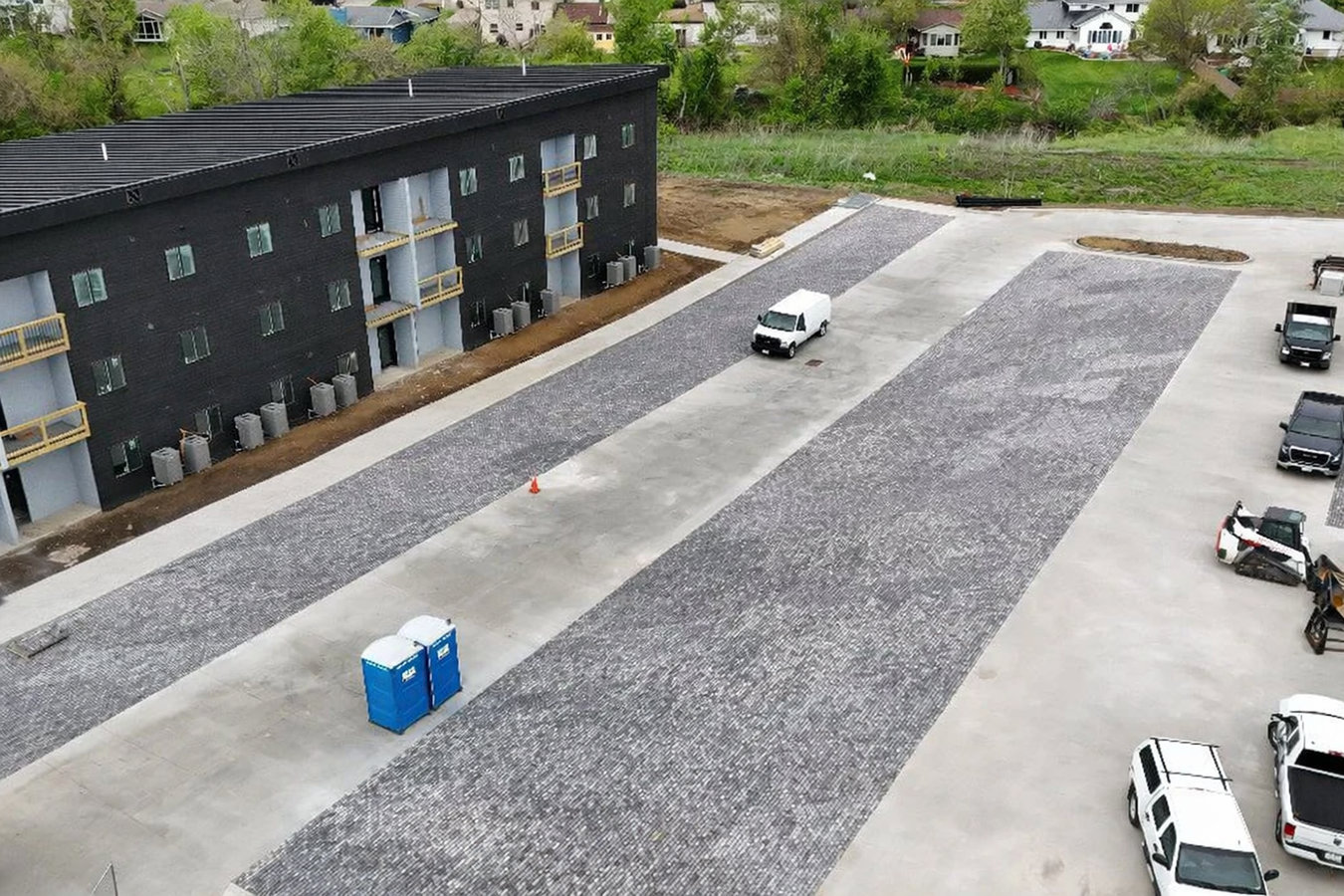
A gravel lot that turns to mud every spring, or an old asphalt surface that cracks every winter, costs you more to maintain than it would to replace. We build concrete parking lots with the drainage, thickness, and site preparation that central Pennsylvania winters demand.
Concrete parking lot building in State College means removing the existing surface, grading the soil for drainage, compacting a gravel base, and pouring a reinforced concrete slab - most small to mid-size lots take one to two days to pour, with a curing period of at least a week before vehicles can use the surface.
Property owners across the State College area deal with gravel lots that flood every spring, aging asphalt surfaces that crack through each freeze-thaw cycle, and parking areas that create mud and tracking problems for anyone who uses them. The combination of Penn State foot traffic, clay-heavy Centre County soils, and winters that average around 50 inches of snow makes this area genuinely hard on any paved surface that was not built right the first time. A concrete lot built with proper drainage and the right slab thickness handles all of those conditions without the annual patching cycle that keeps most property owners stuck in a loop.
If your project also includes structures near the lot, you may want to think about concrete footings for any posts, columns, or walls that need a solid underground base before work begins.
If you have patched cracks in your existing asphalt or concrete and they keep reappearing after winter, the surface underneath has broken down. In State College's climate, repeated freeze-thaw cycles accelerate this process and make patching a losing battle. At some point, rebuilding with a properly prepared concrete surface is more cost-effective than continuing to repair.
Standing water in the middle of your lot is a warning sign that drainage is not working. In a place like State College where spring snowmelt and heavy rain are common, a lot that holds water will deteriorate much faster than one that drains properly. If you see puddles that do not clear within a few hours of a storm, it is time to talk to a contractor.
Many older properties in and around State College still have unpaved or gravel parking areas. If your lot turns to mud every spring, tracks debris into your building, or makes it hard for customers or tenants to park safely, a concrete surface solves all of those problems at once.
If parts of your lot have risen, sunk, or tilted - especially near edges or where the base has shifted - that surface has reached the end of its useful life. Uneven pavement is a trip-and-fall risk, and in State College the liability concern is real for any property owner with regular visitors or tenants.
Every parking lot project starts with an in-person site visit to check the existing surface, soil conditions, how water moves through the area, and whether equipment can access the site. We remove any existing surface, excavate and grade the subbase for drainage, compact gravel to the right depth, and pour a reinforced concrete slab with control joints tooled in before the concrete sets. Drainage grading is not an afterthought - the slight slope that moves water to the edges is built into every pour we do. Our concrete driveway building service follows the same standards if your project includes a connected entry driveway.
We handle permit applications with the Borough of State College or the relevant Centre County township as a standard part of every project. Pulled permits mean your work is officially on record and inspected, which protects you at resale and satisfies lender requirements. We also coordinate Pennsylvania 811 utility marking before any excavation begins - that step is legally required and something every reputable contractor should handle without being asked.
Best for property owners replacing a gravel or deteriorating asphalt area with a permanent, low-maintenance concrete surface.
Suited for rental properties, small businesses, and multi-unit properties near Penn State where durable off-street parking adds real value.
For homeowners in College or Ferguson Township who need additional parking capacity without the maintenance cycle of gravel.
Every pour includes a properly sloped surface so water moves off the lot rather than pooling - essential in State College's wet spring season.
For properties where appearance matters, we can finish the surface with texture or pattern work to complement the surrounding architecture.
Control joints are cut into every lot at regular intervals to give the concrete a controlled place to expand and contract rather than cracking at random.
State College winters average around 50 inches of snow, and the freeze-thaw cycle between November and March is one of the harshest conditions a concrete surface has to handle. When water gets into a small crack and freezes, it expands and makes the crack bigger - every winter. A lot built with the right slab thickness, proper drainage grading, and a solid compacted gravel base is designed to handle this cycle without deteriorating. A lot built to cut costs on site prep will show it within a few seasons. Centre County also has clay-heavy soils in many areas, which hold water rather than draining it and can shift under load if a gravel base is not deep enough to compensate. Contractors working in this area regularly have to excavate deeper and bring in more base material than would be typical in a region with sandier or better-draining soils. The preparation work - which happens before any concrete is poured and is invisible once the job is done - is exactly where quality separates good projects from ones that fail early.
Penn State drives a lot of construction activity in this market, which affects contractor availability and pricing - particularly in the spring and early summer when rental property turnover peaks. Homeowners and property owners in Bellefonte and Lewistown who plan ahead and schedule in late winter tend to get better availability and fairer pricing than those who wait until spring when contractors are fully booked.
We come to your property to look at the existing surface, check how water drains, assess soil conditions, and confirm equipment access. You will receive a written quote that specifies slab thickness, base depth, drainage plan, and what is included - no vague line items. We reply within one business day of your inquiry.
We handle the permit application with the Borough of State College or your township building office before any work begins. We also coordinate 811 utility marking so underground lines are located before excavation. This step can take a week or two depending on the permit office schedule.
The crew removes your existing surface, excavates to the right depth, grades the subgrade for drainage, and compacts a gravel base. This phase is often the most disruptive - plan for equipment in your lot and the area being out of service. Depending on lot size and soil conditions, this takes one to several days.
Concrete is poured, leveled, sloped for drainage, and control joints are tooled in - all in a single operation. After the pour, the lot stays off-limits to vehicles for at least a week. Your contractor will give you a specific date based on weather conditions at the time of the pour.
Free written estimate - no obligation. We respond within one business day.
(814) 996-0735Every lot we pour is designed for central Pennsylvania's climate - the right slab thickness, proper drainage slope, and control joint spacing to handle the freeze-thaw cycle that wears down surfaces built for milder regions. We do not use a one-size approach for a market where winter conditions actively punish shortcuts.
We pull permits with the Borough of State College or the relevant township office and coordinate the inspection before the pour. That documentation protects you if you ever sell the property or need to satisfy a lender - and it means an independent inspector has confirmed the work meets local standards. Unpermitted paving work can create real problems at closing.
Clay-heavy soils are common throughout this area - near Spring Creek, in lower-lying neighborhoods, and on many residential lots. We assess soil conditions on-site before quoting so the base depth and drainage plan match what your specific property actually needs, not a standard spec that ignores local ground conditions.
Pennsylvania requires contractors doing home improvement work to be registered under the state's Home Improvement Contractor program, which gives homeowners legal protections if something goes wrong. Hiring a registered contractor means your recourse options are real - not just a verbal promise. You can verify registration through the{" "} Pennsylvania Office of Attorney General at{" "} attorneygeneral.gov.
When you combine site prep that matches local soil conditions, drainage grading built into every pour, and permit documentation that protects you at resale, you get a parking lot that does its job for decades rather than cycling through repairs every few years. That is what property owners in the State College area deserve from the concrete work they invest in.
Pair a new parking lot with properly poured concrete footings for any adjacent structures that need a solid underground base.
Learn MoreExtend your project to include a connected concrete driveway built to the same frost-depth and drainage standards.
Learn MoreSpring schedules fill fast - reach out now and lock in your project date before the busy season.