
Loading...
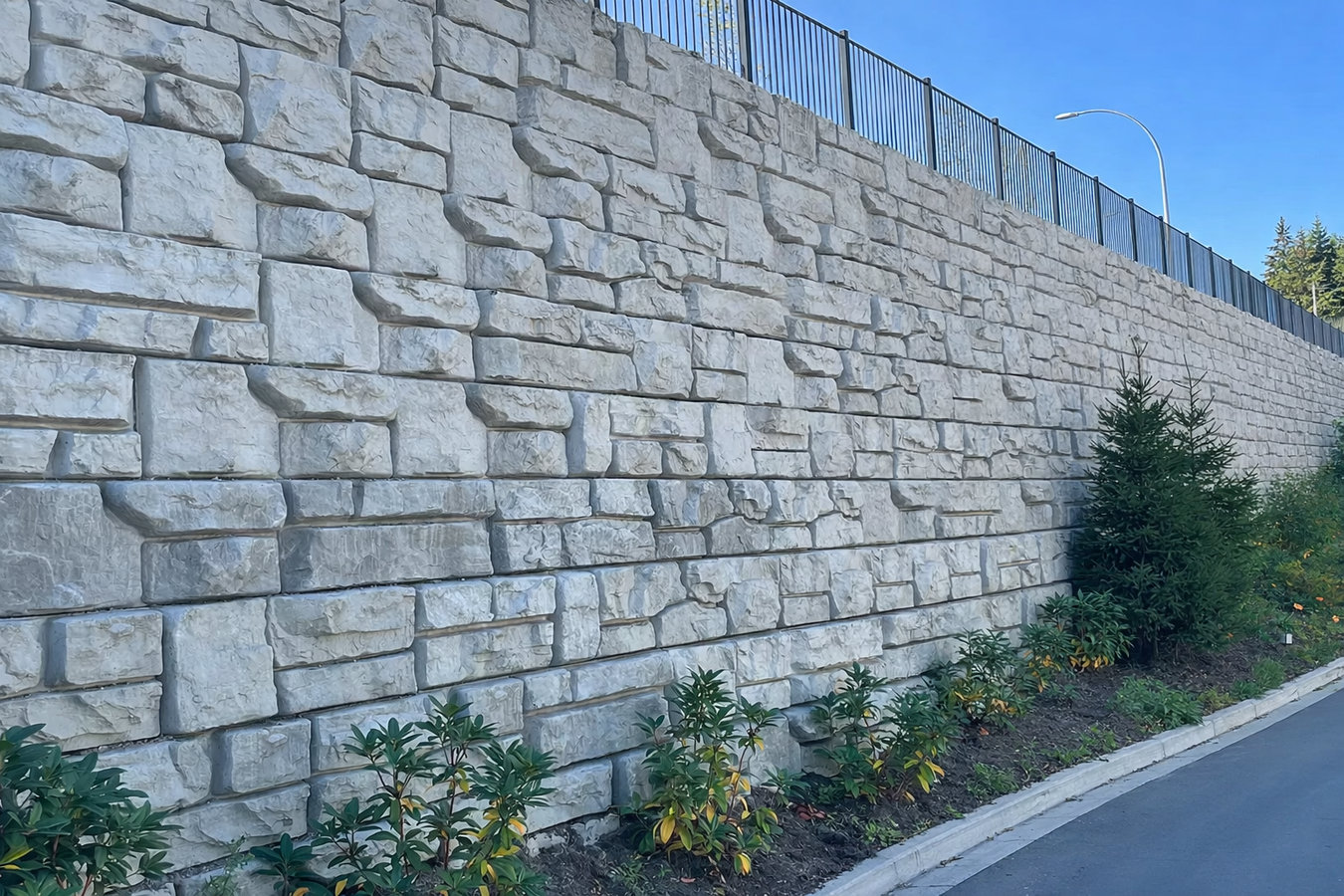
A sloped yard that washes away every spring, or an old wall starting to lean, is a problem that gets worse each freeze-thaw cycle. We build concrete retaining walls with the drainage and footing depth that central Pennsylvania winters demand.
Concrete retaining walls in State College mean excavating below the frost line, setting a gravel base, pouring or laying concrete with a proper drainage system behind it, and backfilling - most residential projects run two to five days of active work, with the area ready for landscaping within a few weeks of completion.
Homeowners across Centre County deal with sloped lots that lose a bit more soil every spring, older timber or stone walls that have reached the end of their life, and grade changes that leave sections of their yard too steep to mow or enjoy. The Ridge and Valley terrain around State College means many properties have a real slope to manage - not just a slight grade. A concrete wall solves the erosion problem permanently rather than patching it with topsoil or mulch each year.
If your project involves significant grade changes, you may also be thinking about adding steps. Our concrete floor installation service pairs well with wall projects when the goal is a fully finished outdoor space.
After snowmelt, walk your yard and look for bare patches, exposed roots, or small gullies where soil has moved downhill. If you see this pattern repeat year after year, the slope is eroding. Patching with topsoil or mulch buys time, but it does not stop the underlying problem - and each year of delay means more soil lost and more excavation needed when you finally act.
If you have an older wall - stone, block, timber, or concrete - and can see it leaning forward or notice horizontal cracks across the face, that wall is under stress it can no longer handle. In State College's climate, a wall that has survived many freeze-thaw cycles may be near the end of its life even if it looks mostly intact. A leaning wall is not a cosmetic issue - it can fail suddenly.
If standing water collects against your house after heavy rain, the grade of your property may be directing water toward your home rather than away from it. A retaining wall combined with proper grading can redirect that flow. Left unaddressed, the water can work its way into your basement or erode the soil around your foundation over time.
If a driveway, patio, or walkway near a sloped area is developing cracks or starting to sink on one side, soil movement beneath it may be the cause. The slope is slowly shifting, and the hardscape on top is showing the strain. Addressing the slope with a retaining wall before the damage spreads is almost always less expensive than replacing the surface after the fact.
Every retaining wall project starts with an in-person site visit - we look at the slope, the soil, how water moves through the area, and whether equipment can reach the site before we give you a number. Demo and removal of any existing wall is included in our pricing. We excavate to below the frost line (at least 36 inches in central Pennsylvania), set a compacted gravel base, pour or lay the concrete, and install a gravel drainage layer with a perforated pipe behind the wall before backfilling. That drainage system is what separates a wall that lasts decades from one that starts failing within a few winters. Our concrete steps construction service is a natural complement when your wall creates a grade change that needs safe pedestrian access between levels.
We handle the permit application with State College Borough or your township office as a standard part of every wall over four feet. Permitted work means the project is on record and inspected - which protects you at resale and protects you from liability. We also coordinate Pennsylvania's 811 call-before-you-dig utility marking before any excavation begins, which is required by law and something every reputable contractor should handle without being asked.
Best for taller walls and complex site conditions - formed in place for a solid, seamless structure with maximum strength.
A versatile option for residential yards - concrete masonry units stack cleanly and can be finished to match your property's look.
For homeowners with significant grade changes - multiple shorter walls step down the slope rather than one tall structure.
Every wall includes a drainage layer behind it - not optional. Proper drainage is what keeps a wall from failing in our freeze-thaw winters.
For walls over four feet or on steep slopes, we work with licensed engineers to meet Pennsylvania permit requirements.
Not every wall needs full replacement - we assess what you have and give you an honest recommendation before you commit to a full project.
State College sits in the Ridge and Valley region of Pennsylvania, where sloped lots are the norm rather than the exception. Neighborhoods like Highlands, Holmes-Foster, and areas east of Penn State's campus have significant grade changes on many properties. That terrain is part of what makes this area beautiful - and it is also what makes retaining walls a practical necessity for a lot of homeowners, not a luxury upgrade. The clay-heavy soils common throughout Centre County compound the challenge: clay holds water rather than draining it, expands when wet and contracts when dry, and puts ongoing pressure on any structure holding it back. A wall that works fine in sandy soil can fail in clay if the drainage design does not account for that movement.
On top of the terrain and soil conditions, the freeze-thaw cycle here is one of the harshest in the mid-Atlantic region. Temperatures cycle above and below freezing repeatedly from late October through March - and every freeze pushes water behind a wall with more force than the last. We build walls in Lewistown and Bellefonte as well, and those communities share the same soil and climate conditions - so the same drainage-first approach applies everywhere we work in this region.
We respond to all inquiries within one business day. Because retaining wall quotes depend heavily on site conditions - slope angle, soil type, equipment access, and drainage - we will not give you a number over the phone. A short on-site visit lets us see exactly what the project involves before we commit to a price.
After the visit, you receive an itemized written estimate covering excavation, drainage, concrete, and cleanup. If your wall will be taller than four feet, we confirm at this stage whether a permit is required and handle the application with your municipality - no paperwork on your end.
The crew digs below the frost line, sets a compacted gravel base, and marks underground utilities through Pennsylvania's 811 service before any digging starts. This is the most disruptive day - expect equipment, noise, and displaced soil. It typically takes one day for most residential projects.
Concrete is poured or blocks are laid, the drainage layer and pipe are installed behind the wall, and the area is backfilled and graded. We walk the finished wall with you before we leave and tell you exactly what to watch for in the first freeze-thaw season.
We visit your property, assess the slope and soil, and give you a written quote - no obligation, no pressure.
(814) 996-0735We work on sloped lots throughout State College, Ferguson Township, Patton Township, and the surrounding area. Hilly lots with clay soil and limited equipment access are what we handle day to day - not the exception to our normal work. That familiarity directly affects the drainage design and footing depth we specify for each project.
Every wall we build includes a gravel drainage layer and perforated pipe behind the concrete - not as an upgrade, but as a baseline requirement. A wall without proper drainage in this climate will fail. We do not offer a drainage-optional version of this service, because it would not hold up through a central Pennsylvania winter.
We pull permits and coordinate municipal inspections for every wall over four feet. That documentation protects you at resale and confirms the wall was built to code. Pennsylvania requires contractors doing residential work to be registered with the state - we meet that requirement. You can verify contractor registration through the Pennsylvania Attorney General.
Our quotes are itemized - excavation, drainage, concrete, and cleanup listed separately so you know exactly what you are paying for. The number we give you after the site visit is the number you pay. We do not quote low to win the job and adjust the price once we are already on your property.
The combination of local terrain knowledge, drainage-first construction, and transparent pricing is what brings homeowners back to us for follow-on projects. When your wall holds through five hard winters without a crack or a lean, that is the result of decisions made in the design and drainage phase - not after the concrete is poured.
After stabilizing your yard with a retaining wall, update the floors inside with a new concrete pour built for Pennsylvania winters.
Learn MorePair a new retaining wall with concrete steps to create safe, grade-change access between yard levels.
Learn MoreSpring is the busiest season for retaining wall work in State College. Reach out now and we will get your property assessed before the next round of heavy rain and snowmelt does more damage.